What makes Xi'an food different?
Xi'an sits in Shaanxi, where wheat-based foods often feel more central than rice. First-time visitors notice the difference quickly: wide hand-pulled noodles, flatbreads, filled breads, torn bread in broth and snacks designed to be eaten while walking. The flavor profile often leans savory, aromatic, sour and spicy, with vinegar, garlic, chili oil, cumin and lamb or beef appearing often.
A useful way to approach the city is not as one single food street, but as a set of everyday eating rituals. Some dishes are quick snacks. Some are sit-down bowls. Some are better when you understand the ordering process first. A private walk can help connect the foods to the habits around them instead of turning the evening into a checklist.
This matters because many Xi'an foods are simple on paper but specific in practice. A bowl can depend on noodle width, chili fragrance and the balance of vinegar. A bread snack can depend on how crisp the shell stays after filling. A broth dish can depend on whether the bread is torn small enough. Small details make the food more memorable than a list of famous names.
Noodles and breads are the backbone
Biangbiang noodles are a natural entry point for visitors because they are visual, filling and strongly associated with Shaanxi cooking. They are usually broad and belt-like, with chili oil, vinegar and aromatics doing much of the work. The dish is not delicate; the point is texture, heat and the satisfying pull of wheat dough.
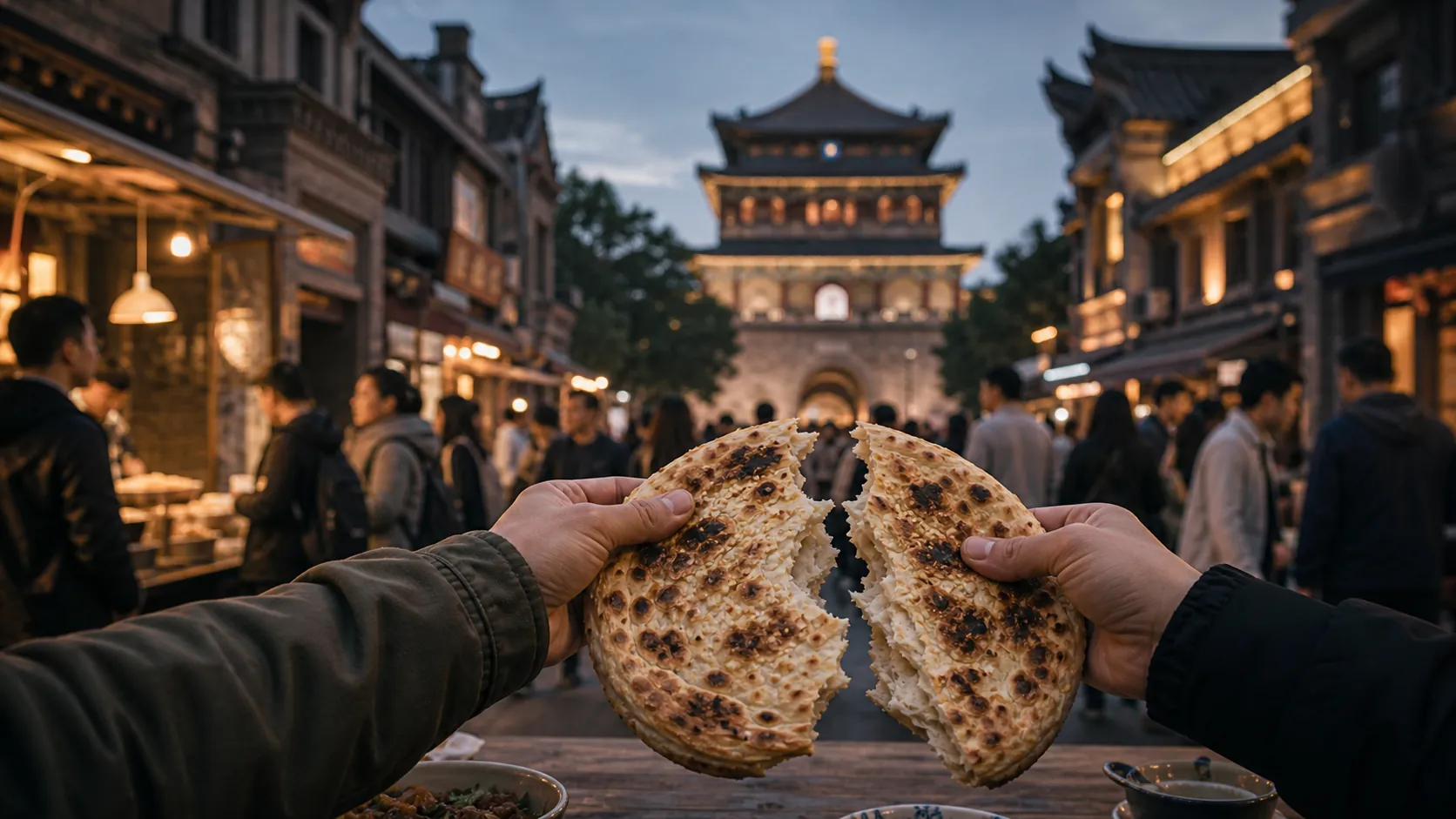
Breads matter just as much. Roujiamo places chopped stewed meat inside a crisp flatbread. Paomo asks the eater to break bread into small pieces before it is soaked in lamb or beef broth. These dishes show why Xi'an food is often better understood through texture and process than through a simple list of ingredients.
Travelers should also expect portion size to be serious. One noodle bowl plus one bread-based snack can already feel like a full meal. If you want to taste several things in one outing, pacing matters. It is usually better to share, walk between stops and leave room for one lighter cold dish or snack rather than ordering every famous dish at the first place you see.
Muslim-influenced food culture
The historic Muslim Quarter is one of the best-known areas for visitors, especially because it brings together Hui Muslim food traditions, snack shops, mosques and dense commercial streets near the old city center. It can be crowded and tourist-facing, but it is still useful for understanding how beef, lamb, breads, sweets and market energy shape the city's food identity.
This does not mean every good meal must happen in one busy lane. Some travelers enjoy the energy of the market, while others prefer a calmer route with more room to ask questions and eat slowly. A practical food walk can include market-style eating, but it should also consider timing, crowds, weather, walking comfort and the group's appetite.
For travelers with dietary needs, this is also where questions matter. Pork-free does not automatically mean vegetarian. Halal context does not automatically mean every stall or restaurant fits every personal standard. A good food walk should make space for questions before ordering and should avoid promising certainty when details need to be checked in person.
How market-style eating works
Market eating in Xi'an can be fast, noisy and highly visual. You may see dough being pulled, meat being chopped, skewers being turned or breads being stacked before you understand the menu. That is part of the appeal, but it can also make ordering harder if you do not read Chinese or if you need to ask about spice, meat, nuts or other ingredients.
A good strategy is to separate curiosity from capacity. Look first, ask what is realistic to eat, then choose a small sequence. You do not need to finish every dish alone. Sharing one bowl or one snack between two people can create a better tasting route than ordering full portions repeatedly and getting tired halfway through the walk.
Cashless payment and local ordering habits may also feel different from what visitors expect. Some shops are simple, some are crowded, and some are better for a quick bite than for a long conversation. A private walk can reduce friction by helping with ordering, pacing and deciding when it is better to move on.
How to plan your first food walk
Do not try to eat every famous dish in one sitting. Xi'an portions can be heavy, especially when noodles, bread and broth are combined. A better approach is to balance one main bowl, one bread-based snack, one lighter cold dish or skewer, and time for walking between stops.
Before confirming a private food walk, share your date, group size, walking comfort, spice tolerance and dietary limits. If you are arriving by train or air, share that context too. The exact route, timing, meeting point and cost should be confirmed by email before you commit.
The best result is not a rigid route. It is a plan that gives you a clear food focus while leaving room for weather, appetite and local conditions. Xi'an is a strong city for travelers who like carbs, spice and street-level food culture; the right walk should make that food easier to understand without pretending every detail can be guaranteed in advance.