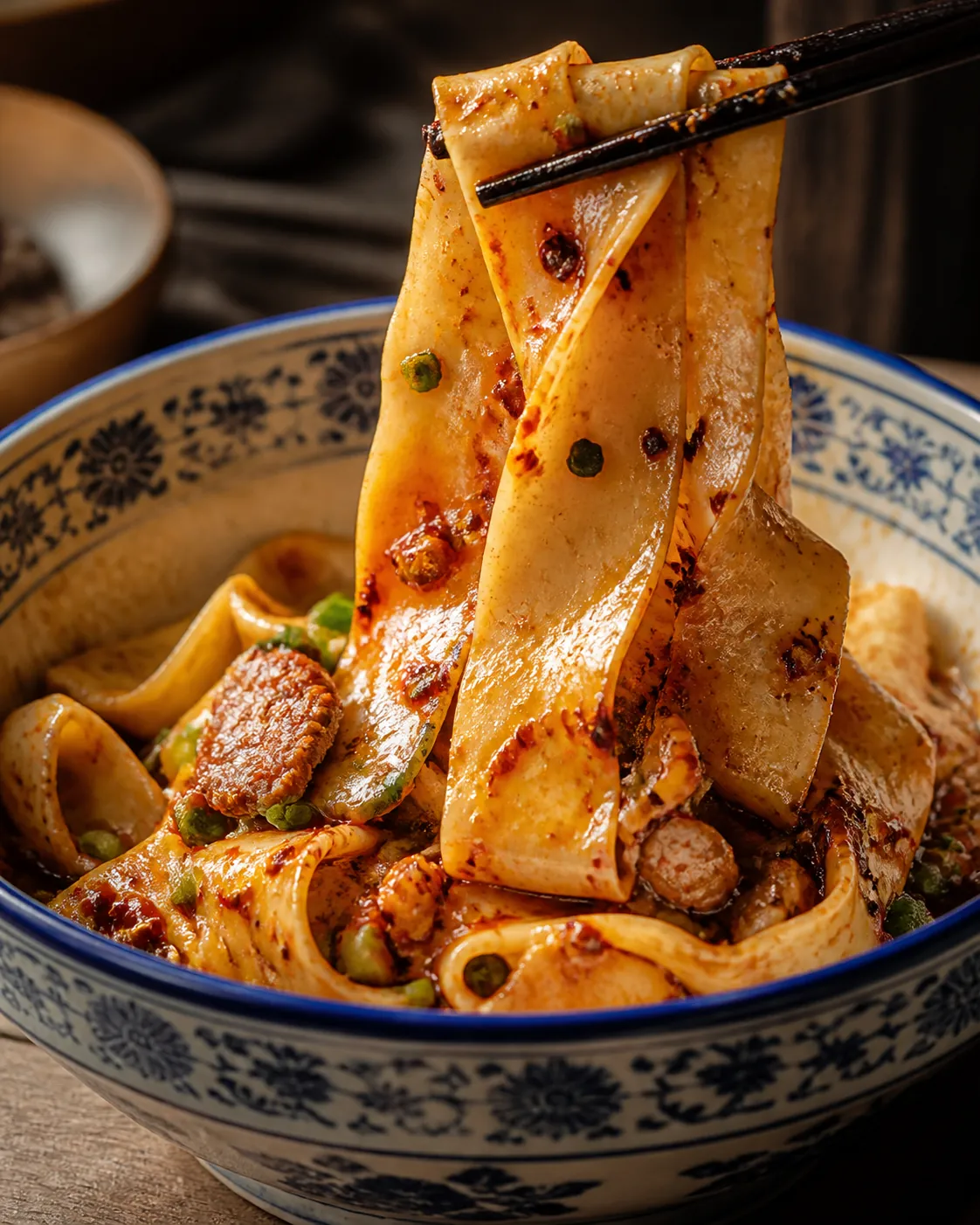
Biangbiang noodles
Biangbiang noodles are often the first dish travelers ask about, and for good reason. The noodles are broad, chewy and usually dressed with chili oil, vinegar and aromatics. They make a strong first impression because the dish is physical: the noodle width, the slap of dough, the gloss of oil and the sound of mixing all matter.
Ask how spicy the bowl is before ordering. Some versions are balanced and fragrant, while others are much hotter than visitors expect. If you only have time for one noodle dish, this is usually the easiest place to start because it introduces the wheat, vinegar and chili profile that appears across much of the local food culture.
Biangbiang noodles also make a useful comparison point for the rest of the walk. After one bowl, you can better understand why Xi'an cooking often values chew, oil, acid and aroma. The dish is filling, so it works best when the group shares or treats it as the main anchor of the meal.
Roujiamo
Roujiamo is often described outside China as a Chinese-style burger, but that shortcut misses the bread. A good version depends on contrast: crisp flatbread, chopped stewed meat and enough juice to flavor the bread without making it collapse.
Pork versions are common, while beef or lamb versions are more likely in Muslim areas. Travelers with dietary limits should ask before ordering rather than assuming one version applies everywhere. This is especially important for visitors avoiding pork or looking for vegetarian food, because the English shorthand can hide real differences.
As a food-walk stop, roujiamo is practical because it is easy to share and does not require a long sit-down meal. It can be part of a route before or after a noodle bowl, but the group should still consider appetite. A hot bread snack can feel small at first and surprisingly filling a few minutes later.
Yangrou paomo
Yangrou paomo is slower and more ritual-based. The eater breaks bread into small pieces, and the kitchen combines it with lamb broth and meat. It is warming, filling and better when someone explains the process before you sit down.
This is not always the easiest dish for a quick snack stop because it can be heavy. It works best when the group wants a sit-down moment and has enough appetite left for a broth-based meal. Travelers who are short on time may prefer to learn about it, taste a smaller portion if practical, or save it for a separate meal.
The important thing is not just the flavor of the broth. The dish shows how bread can become part of a bowl rather than only a wrapper or side. That idea helps visitors understand why Xi'an food often feels different from rice-centered meals in other parts of China.
Cold noodles and lighter dishes
Liangpi and other cold noodle dishes bring acidity and chili without the weight of another hot noodle bowl. They can reset the palate during a walk because they are usually cooler, slippery, sour and spicy. For many travelers, this contrast makes the route more enjoyable than moving from one heavy carb dish to another.
Cold dishes are also useful when the weather is warm or when the group includes people with different appetites. They can be shared easily, and the seasoning gives you another view of local flavor: vinegar, chili oil, garlic and sesame or wheat-based textures may appear in different combinations depending on the version.
This category is also a good place to pause and ask what the group still wants from the route: more heat, more crunch, a broth dish, or a lighter snack before dessert.
Skewers, breads and snacks
Skewers add smoke, cumin and a different rhythm to the walk. They can be part of a market-style route, but they should be chosen with the group's comfort in mind. Some travelers want the busiest atmosphere; others prefer a quieter stop where it is easier to ask what is being cooked.
Small breads, sweet snacks and market pastries are useful for pacing because they let you taste more without committing to another full meal. This is where a private route can help: the goal is not to collect every item, but to build a sequence that gives variety without exhausting the group.
When ordering snacks, ask what is inside before you buy. Fillings, meat types, nuts, sesame, dairy and spice levels can vary. If allergies or dietary limits matter, mention them before the route is confirmed and again before ordering in person.
What to ask before ordering
A practical Xi'an food checklist should include questions, not only dishes. Ask how spicy the food is, what meat is used, whether pork is included, whether a dish contains nuts or sesame, and whether the portion is realistic for sharing. These questions are simple, but they make the difference between a good food walk and an uncomfortable one.
The best route is usually not the longest list. It is a sequence: something hot, something crisp, something sour or cold, something smoky, and enough walking time to keep the evening enjoyable. If you are booking or inquiring, share the foods you care about most, then let the final plan be confirmed by email around timing, availability, appetite and cost.